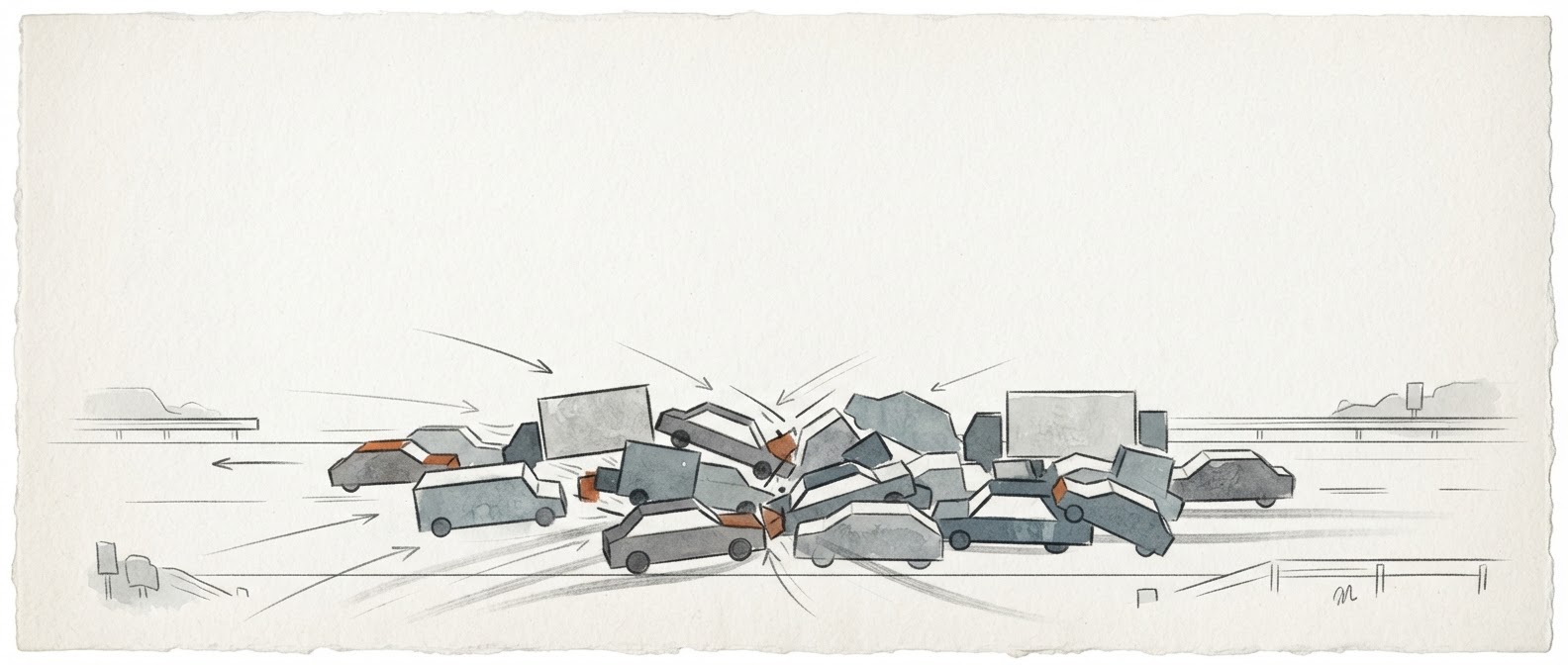
Look at the liability section of your policy declarations page and you’ll likely see three numbers separated by slashes, something like 100/300/50. Most drivers glance past this notation without ever learning what each figure controls. The first two numbers are your bodily injury liability limits, and they’re split into per-person and per-accident amounts. Understanding that split matters because it determines exactly how much your insurer will pay out when someone else is hurt in a crash you caused, and it can leave a real gap between what a court or settlement says you owe and what your policy actually covers.
What Per-Person Means
The per-person limit is the maximum amount your insurer will pay for injuries to any single individual in an accident you’re responsible for. If your declarations page shows 100/300/50, the “100” represents your per-person limit, typically expressed in thousands of dollars. That means your insurer will pay up to that amount for one person’s medical bills, lost wages, and other injury-related damages, no matter how severe the injury or how high the actual costs run.
This limit applies individually to each person injured in the accident. If you cause a crash and injure a single passenger in the other vehicle, your per-person limit is the ceiling on what your insurer pays for that person’s claim, full stop. It doesn’t matter whether other people were also in the car unhurt, or whether your per-accident limit is much higher. The per-person number is a hard cap for each individual claimant.
It’s worth noting that this limit covers bodily injury liability specifically, meaning injuries to other people. It has nothing to do with damage to vehicles or property, which falls under a separate liability category with its own limit. It also has nothing to do with your own injuries if you’re at fault, which would fall under different coverage entirely, such as medical payments or personal injury protection, depending on your state and your policy.
What Per-Accident Means
The per-accident limit, the second number in that slash notation, is the total ceiling your insurer will pay for all injury claims combined arising from a single accident. Using the same example of 100/300/50, the “300” is the per-accident limit. That means no matter how many people were injured, and no matter how large each individual claim is, your insurer will not pay more than that combined total for bodily injury liability from that one event.
This is where the two numbers start to interact in a way that catches people off guard. The per-accident limit is not simply the per-person limit multiplied by however many people were hurt. It’s an independent cap. In the 100/300 example, you could have three people injured, each with a claim that would justify the full $100,000 per-person limit, but the total payout across all three is still capped at $300,000. The insurer doesn’t write three checks for $100,000 each just because the per-person limit allows it. The per-accident number governs the total.
Because of this, the per-accident limit is always equal to or greater than the per-person limit, and often it’s set at roughly two to three times the per-person figure on standard policies, though the exact ratio varies by insurer and by the specific limits a driver selects. If you’re unsure what ratio applies to your own coverage, your declarations page will show both numbers directly, and your agent or insurer’s customer service line can walk through what they mean for your specific policy.
Why the Split Exists
The two-tier structure might seem like unnecessary complexity, but it exists to balance two competing goals: giving meaningful protection to any one injured person, while keeping a predictable outer boundary on what an insurer might owe from a single event.
Without a per-person cap, a single catastrophic injury claim could theoretically consume an entire per-accident limit, leaving nothing for anyone else hurt in the same crash. The per-person limit guarantees, in effect, that no one person’s claim can be reduced simply because other people were also injured in the same accident and are also seeking payment. Each person’s claim is evaluated up to the per-person ceiling independently.
Without a per-accident cap, on the other hand, an insurer’s exposure in a multi-victim accident could balloon far beyond what the per-person limit alone would suggest, especially in accidents involving several vehicles or a bus, van, or rideshare full of passengers. The per-accident limit puts a boundary on total exposure, which is part of how insurers price policies and manage risk across their entire book of business. It’s also part of why raising your per-person limit alone, without a corresponding increase in your per-accident limit, would provide limited practical benefit in a multi-person accident. The two figures are designed to move together.
This split isn’t unique to auto insurance. You’ll find the same per-person/per-occurrence structure in general liability policies for businesses, homeowners liability coverage, and umbrella policies. It’s a standard architecture across liability insurance generally, because the underlying problem, protecting individuals while capping aggregate exposure, is the same regardless of what kind of policy you’re looking at.
What Happens When a Claim Involves More Than One Person
This is where the split actually plays out, and it’s worth walking through carefully because it’s the scenario most drivers never think about until they’re in it.
Suppose you’re at fault in an accident where three people in the other vehicle are injured: the driver and two passengers. Each of them will have their own claim for medical costs, lost income, and other injury-related damages. Your insurer evaluates each person’s claim individually, up to your per-person limit, but the combined payout across all three claims cannot exceed your per-accident limit.
Here’s a simplified illustration using round numbers, not any specific real-world figures: if your limits are 50/100, and one injured person’s claim is valued at $60,000, your insurer will only pay up to $50,000 for that person, because that’s the per-person ceiling, regardless of the per-accident number being higher. If a second person in the same accident has a claim valued at $40,000, and a third has a claim valued at $30,000, the combined total of what would otherwise be owed is $120,000 across the three people. But your per-accident limit is $100,000, so the total actually paid out is capped there, even though the per-person limit ($50,000) was never exceeded by any single claim.
How that capped total gets divided among the three injured people isn’t something the per-person and per-accident numbers alone answer. That allocation process, when total claims threaten to exceed the per-accident limit, involves the insurer, sometimes legal representation for the claimants, and potentially a court, depending on how the claims are being resolved. The numbers on your declarations page set the outer boundaries of what your insurer will pay; they don’t determine the internal math of how multiple claimants split a limited pool.
This also raises the practical possibility that when a serious multi-person accident happens, the people you injured may end up with unpaid portions of their claims that exceed what your liability coverage was able to cover. This is precisely why underinsured motorist coverage exists on the other side of the transaction, so that if you’re the one injured by someone whose limits run out before your claim is satisfied, you may have another source of recovery to look into, separate from the at-fault driver’s insurer. That’s a topic worth reading about on its own, since it functions differently from the liability side.
A Few Things Worth Checking on Your Own Policy
Because the per-person and per-accident distinction only matters in the specific event of a multi-person injury claim, it’s easy to go years without ever thinking about it. A few habits make the split less abstract:
- Find your declarations page and locate the actual numbers for your bodily injury liability line. They’ll be listed in that slash format, and confirming what they are takes less time than most people expect.
- Notice the ratio between your per-person and per-accident limits. If you regularly drive with multiple passengers, carpool, or use your vehicle for rideshare or delivery work, a higher per-accident limit relative to per-person may be worth discussing with your agent, since more people in your vehicle at any given time increases the odds that a single accident involves multiple injured claimants.
- Remember that these two numbers govern bodily injury only. Property damage liability, which covers the other driver’s vehicle or other property, is a separate figure entirely, usually the third number in the slash notation, and it doesn’t split into per-person and per-accident because property damage claims aren’t tied to individual people in the same way injury claims are.
- If you want to know exactly how your insurer defines “accident” for purposes of the per-accident limit, or how it would handle a specific multi-vehicle scenario, your policy’s full text or a call to your insurer will have the precise language, since definitions can carry more nuance than the shorthand numbers on the declarations page suggest.
The per-person/per-accident split isn’t a trick or a loophole; it’s simply how liability coverage is structured to handle the reality that accidents can hurt more than one person at a time. Knowing which number does what means you’ll never be surprised by the shape of your own coverage, even if you never need to use it.