What Comprehensive Coverage Means
Comprehensive coverage is the part of an auto policy that pays for damage to your own vehicle that happens for reasons other than a crash with another car or object. The name is a little misleading, because it suggests the coverage handles everything, but that’s not quite right. A more accurate description would be “non-collision physical damage coverage” – it deals with the things that happen to a car when nobody was driving badly, or when nobody was driving at all.
To understand comprehensive, it helps to see where it sits next to the other coverage lines on your policy. Collision coverage pays for damage from hitting another vehicle or a stationary object, like a guardrail or a parked car. Liability coverage pays for damage or injury you cause to other people. Comprehensive fills the remaining gap: damage to your car caused by outside forces that aren’t tied to a driving impact at all.
Comprehensive is optional in the sense that no state requires it the way liability coverage is typically required. But if you have a loan or lease on the vehicle, the lender or leasing company will almost always require you to carry it, because they have a financial interest in the car and want it protected against loss even when no collision is involved. Check your loan or lease agreement, or your declarations page, if you’re not sure whether you currently have this coverage – it’s usually listed as a separate line item labeled “comprehensive” or “other than collision,” often abbreviated OTC in some paperwork.
What Counts as Non-Collision Damage
This is the part of the policy most drivers have never actually read, because most drivers never need it until a specific event happens. Once you see the list, the logic becomes clear: comprehensive covers damage from things a driver couldn’t reasonably have prevented through careful driving, because driving wasn’t really the cause.
Weather Events
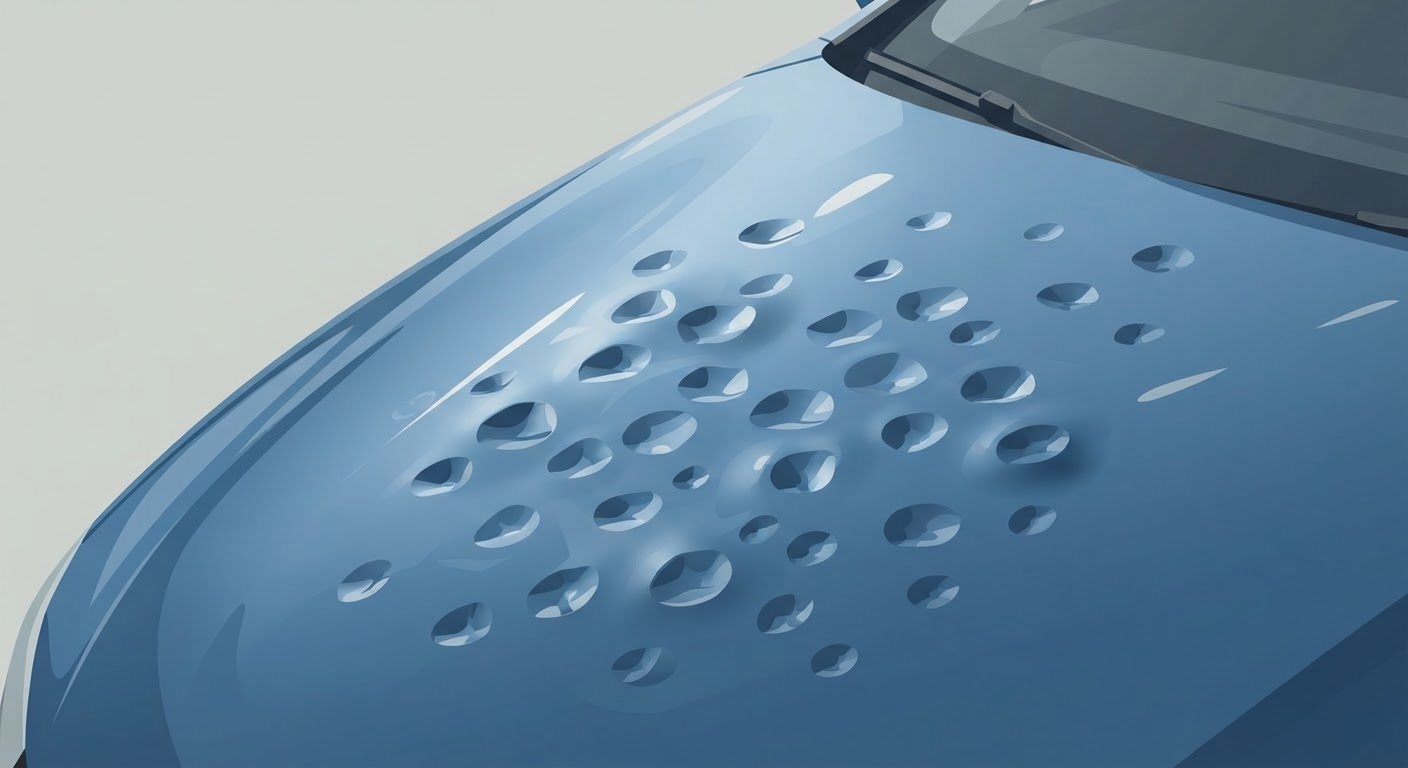
Hail is the classic example. A hailstorm dents a hood and roof, and there’s no driving error involved – the car could have been parked in a driveway the whole time. Comprehensive is the coverage that responds to this kind of damage. The same is true for damage from windstorms, such as a tree limb or a fence panel blown onto the car, and for flooding, where rising water gets into the engine or cabin.
Fire
Whether a car catches fire from an electrical fault, a fuel line issue, or an external source like a wildfire, fire damage generally falls under comprehensive rather than collision, because the damage isn’t the result of an impact with another vehicle or object.
Theft and Vandalism
If the car itself is stolen, comprehensive is the coverage that would pay out based on the vehicle’s value, subject to the policy’s terms. If someone breaks a window, keys the paint, or spray-paints the car, that’s vandalism, and it’s also handled under comprehensive rather than collision, since no driving was involved on either side.
Animal Collisions
This one surprises a lot of people. If you hit a deer, it sounds like it should be a collision claim, since the car struck something. But insurers generally treat animal strikes as a comprehensive matter, not a collision matter, because the event is treated as an unavoidable hazard similar to a falling object rather than a driving-caused impact. This is worth remembering, because it means a driver who only carries liability and collision coverage, and skipped comprehensive, may find that an animal strike isn’t covered at all under their current policy.
Falling or Flying Objects
A branch falling on the car, a rock kicked up on the highway, debris coming loose from a truck ahead – these are generally comprehensive claims. The common thread is that the object came from outside the car and outside the driver’s control, rather than resulting from how the car was being driven.
Glass Damage
Windshield cracks and chips are one of the most common comprehensive claims filed, precisely because they happen so easily and so often – a stone kicked up by a truck tire, a sudden temperature change, road debris. Many insurers offer a separate glass deductible, sometimes lower than the standard comprehensive deductible or waived entirely, specifically because windshield damage is so frequent and often cheaper to fix than other comprehensive claims. Check your declarations page or policy documents to see whether your comprehensive coverage includes a distinct glass deductible provision, since this varies by insurer and by state.
Civil Disturbance and Riot Damage
Damage from riots, civil commotion, or similar events is also typically handled under comprehensive, again because it’s damage that happens to a parked or present vehicle through no fault of the driver.
The pattern across all of these categories is the same: comprehensive covers loss events where the car is essentially a passive victim of something external – weather, an animal, a criminal act, a falling object – rather than the result of the vehicle being driven into something.
How the Deductible Applies Here Too
A deductible is the amount you agree to pay out of pocket before your insurance pays the rest of a covered claim. Comprehensive coverage has its own deductible, and it’s worth knowing that this deductible can be, and often is, a different dollar amount from your collision deductible. Nothing requires the two to match, and many drivers choose a lower comprehensive deductible than collision deductible, on the reasoning that comprehensive claims like glass damage tend to be smaller and more frequent, while collision claims tend to be larger and less frequent.
Here’s how it works in practice. Say your car sustains hail damage and a body shop estimates the repair cost. If that cost is higher than your comprehensive deductible, you’d generally pay the deductible amount, and the insurer would cover the rest, up to your coverage limits. If the repair cost is lower than your deductible, filing a claim may not make financial sense at all, since you’d end up paying the full deductible or close to it without meaningfully benefiting from having insurance step in. Some drivers choose to pay for very minor comprehensive damage out of pocket for this reason, and also because filing a claim can affect future premiums even when the incident wasn’t the driver’s fault – so it’s worth weighing the size of the damage against your specific deductible before deciding whether to file.
Your declarations page will list your comprehensive deductible separately from your collision deductible, usually as a specific dollar figure. If you don’t currently know this number, it’s worth looking it up before you need it, rather than during a stressful moment after a storm or a break-in. As mentioned above, many policies also carve out a special rule for windshield or glass claims, sometimes reducing or waiving the deductible specifically for glass repair, on the idea that a cheap windshield repair now can prevent a more expensive windshield replacement later. Whether your policy includes this feature, and what the terms are, is something to confirm directly with your insurer or in your policy documents, since it isn’t universal.
One more detail worth knowing: like collision coverage, comprehensive coverage generally pays out based on the actual cash value of your vehicle at the time of the loss, not the amount you originally paid for it or the cost of a brand-new equivalent. This matters most for older vehicles, where the payout on a total loss claim may be lower than a driver expects, simply because the car’s value has depreciated over time. This isn’t a comprehensive-specific quirk – it’s how physical damage coverage works generally – but it’s easy to overlook until a claim is actually being settled.
What Comprehensive Doesn’t Cover
Just as important as knowing what comprehensive includes is knowing where its boundaries sit. A few categories consistently fall outside comprehensive coverage, and confusing these with covered events is a common source of surprise at claim time.
- Collision damage. If you hit another car, a guardrail, a parked vehicle, or any stationary object while driving, that’s a collision claim, not a comprehensive one, even though it also involves damage to your own car. The two coverages are meant to be complementary, not overlapping – many drivers carry both, but they respond to different kinds of events.
- Mechanical breakdown and normal wear. A transmission that fails from age, a battery that dies, brakes that wear down over normal use – none of this is comprehensive damage. Comprehensive responds to sudden, external, identifiable events, not the gradual deterioration that comes from simply owning and using a car. Mechanical breakdown coverage, where it exists, is typically a separate add-on with its own rules, distinct from comprehensive.
- Damage to other people’s property. Comprehensive covers your own vehicle. If your car rolls forward and dents a neighbor’s fence, or if some other event involving your car damages someone else’s property, that’s a liability matter, not a comprehensive one.
- Personal belongings inside the car. If a laptop, phone, or other personal item is stolen from inside the vehicle, that loss is generally not covered under your auto comprehensive coverage. It may fall under a homeowners or renters policy instead, since those policies often cover personal property regardless of where it was when it was lost or stolen. It’s worth checking your homeowners or renters policy for this kind of coverage rather than assuming your auto policy handles it.
- Damage from routine use or driver neglect. Scratches from normal aging, upholstery wear, or damage that results from ignoring an obvious maintenance issue typically isn’t treated as a comprehensive claim, because it isn’t a discrete, sudden, external event.
- Injuries to people. Comprehensive is physical damage coverage for the vehicle itself. It has nothing to do with medical costs for you, your passengers, or anyone else – those are handled, where applicable, under entirely separate coverage lines such as medical payments, personal injury protection, or liability, depending on your state and your policy.
The clearest way to think about the line between comprehensive and everything else is to ask two questions: was this a sudden, identifiable event, and did it happen to the car itself rather than through the ordinary act of driving into something? If the answer to both is yes, comprehensive is probably the coverage that applies. If the damage built up over time, or happened because the car struck something while being driven, you’re likely looking at a different part of the policy – or no coverage at all, if the event falls into a gap like mechanical wear. When in doubt about how a specific event would be classified, your policy documents or your insurer’s claims department can tell you how a particular type of loss is categorized under your specific contract, since policy language can vary somewhat between insurers even when the general concepts are the same.